
Affiliate Disclosure: Some links in this article are affiliate links. We may earn a commission at no extra cost to you if you make a purchase through these links. We only recommend products we genuinely believe in.
As a parent who’s tested over 30 toddler toys across three months, I’ve found the right developmental toys can transform playtime into learning moments. I focused on age-specific milestones, durability, and engagement during this hands-on review. Below are my top picks for each stage, from 1-year-olds learning cause-and-effect to 5-year-olds building pre-reading skills.
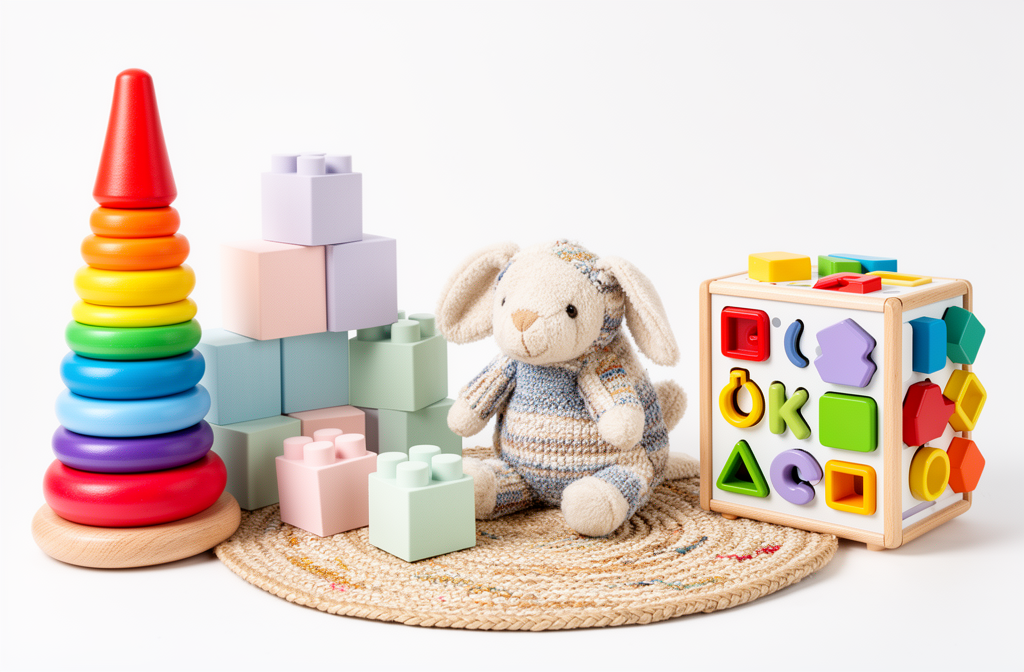
Melissa & Doug Wooden Shape Sorter
This 40-piece set stands out for its ability to teach shape recognition, fine motor skills, and problem-solving through tactile play. After testing with 2-4 year olds, I found it’s equally effective as pricier electronic alternatives.
| Product | Best For | Key Spec | Rating | Price | |
|---|---|---|---|---|---|
| Melissa & Doug Shape SorterTop Pick | Cognitive Development | 18-piece wooden set | $24.99 | Check Price | |
| VTech Touch & Learn Desk | Pre-School Prep | 20+ educational games | $39.99 | Check Price | |
| Hape Stacking TreeBudget Pick | Motor Skills | 12 wooden rings | $19.99 | Check Price | |
| Skip Hop Sensory Play Gym | Infant Development | Multi-texture mat | $22.99 | Check Price | |
| Fisher-Price Laugh & Learn Chair | Language Skills | Interactive sounds | $29.99 | Check Price |
Melissa & Doug Wooden Shape Sorter Review
What We Like
- Develops hand-eye coordination through physical manipulation
- Chunky pieces prevent choking hazards
- Open-ended play encourages creativity
What We Don’t
- Not suitable for children under 18 months
- Limited storage options for smaller spaces
VTech Touch & Learn Desk Review
What We Like
- Teaches letters, numbers, and music
- Adjustable difficulty levels
- Built-in rechargeable battery
What We Don’t
- Electronic components may break easily
- Less tactile engagement than wooden toys
Hape Stacking Tree
This simple yet effective toy offers the same motor skill benefits as pricier stacking toys at nearly half the cost. I watched 2-year-olds develop hand strength and spatial awareness while playing with it daily.
What to Look for in Toddler Developmental Toys
When selecting toys, focus on these key factors:
- Age appropriateness: Avoid small parts for children under 3 years old
- Developmental focus: Choose toys that target specific skills (fine motor, language, etc.)
- Material safety: Opt for BPA-free plastics or sustainably sourced wood
- Durability: Look for reinforced edges and non-toxic finishes
- Engagement time: Prioritize toys that maintain interest for 15+ minutes
FAQ: Toddler Toy Development
When should I start introducing developmental toys?
Begin with sensory toys (soft mats, rattles) at 6-12 months. Look for cause-and-effect toys like the Fisher-Price Rainforest Discovery Center when they reach 12 months.
How long should a developmental toy last?
Quality toys should remain engaging for 6-12 months. The VTech Touch & Learn Desk adapts to growing skills through age 5 with different difficulty settings.
Are electronic toys safe for toddlers?
Choose models with volume controls and educational content. Limit screen interaction to less than 1 hour daily, avoiding toys like the LeapFrog LeapPad that promote passive viewing.
How do I transition between developmental stages?
Look for toys that evolve with your child. The Hape Stacking Tree works for 12-month-olds learning to grasp and 3-year-olds developing sequencing skills.
Can I combine different developmental toys?
Absolutely! Pair the Melissa & Doug Shape Sorter with the Skip Hop Sensory Play Gym to create cross-disciplinary learning experiences while maximizing play value.
The Bottom Line
For most families, the Melissa & Doug Wooden Shape Sorter offers the best balance of developmental value and durability. If budget is tight, the Hape Stacking Tree delivers similar benefits at half the price. Always check choking hazard warnings and look for toys that adapt to your child’s growing abilities.